About the Department
Welcome to the ISE department at Basaveshwar Engineering College. We focus on software development, data science, and modern computing.
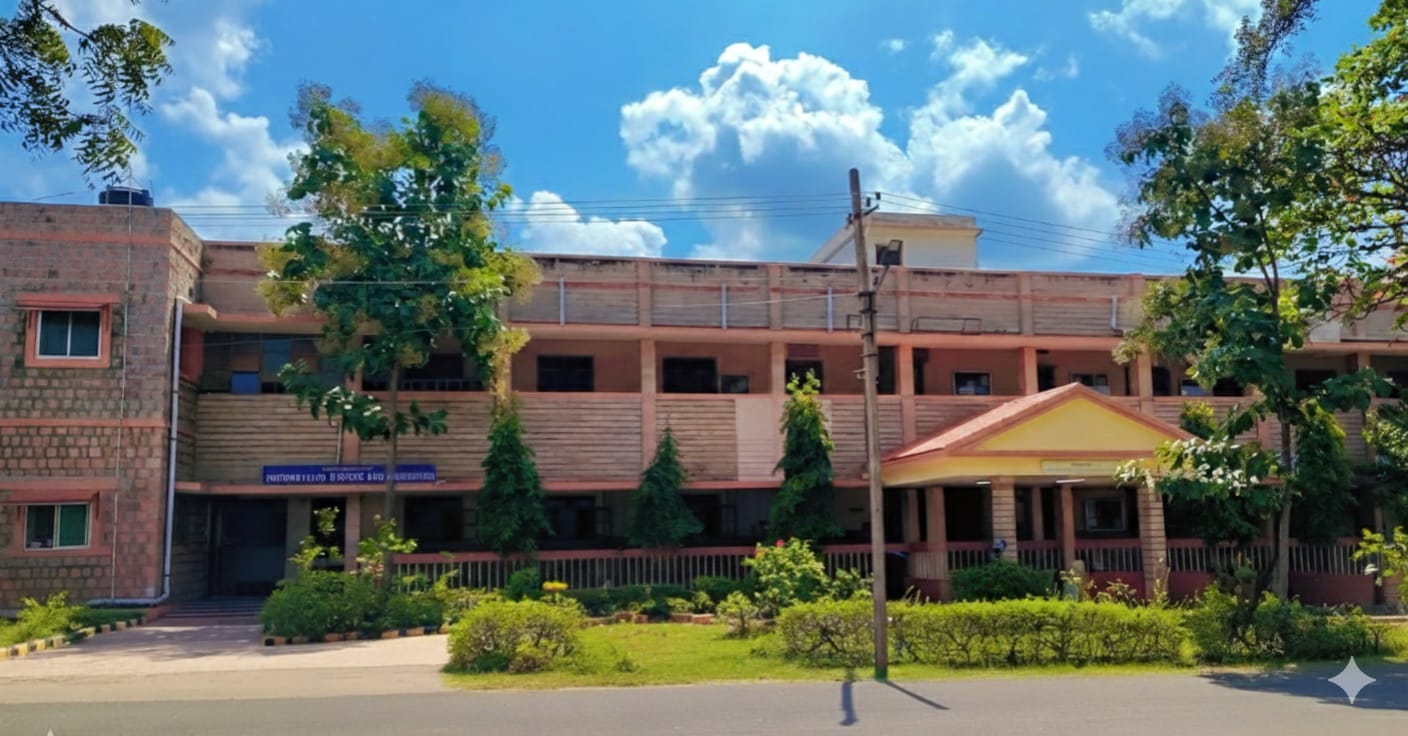
Department Faculty List (2025-26)
| Sl.No | Name | Designation | Qualification | Specialization |
|---|---|---|---|---|
| 1 | Dr. S. R. Patil | Professor | Ph.D | Image Processing |
| 2 | Dr. S. P. Bangarshetti | Professor | Ph.D | Image Processing |
| 3 | Prof. P. V. Kulkarni | Associate Prof. | M.Tech | Database Systems |
| 4 | Prof. P. S. Puranik | Associate Prof. | M.Tech | Web Technology |
| 5 | Dr. L. B. Bhajantri | Associate Prof. | Ph.D | Wireless networks and communications |
| 6 | Prof. R. B. Math | Assistant Prof. | M.Tech | Quality management |
| 7 | Prof. V. S. Patil | Assistant Prof. | M.Tech | Image processing |
| 8 | Prof. S. N. Kugali | Assistant Prof. | M.Tech | Computer networks |
| 9 | Prof. S. M. Kulkarni | Assistant Prof. | M.Tech | Virtual Adhoc networks |
| 10 | Prof. G. M. Patil | Assistant Prof. | M.Tech | Networking |
| 11 | Prof. P. K. Deshapande | Assistant Prof. | M.Tech | Algorithms and databases |
| 12 | Prof. G. B. Shettar | Assistant Prof. | M.Tech | Software testing and Computer networks |
| 13 | Prof. D. I. Kalappanavar | Assistant Prof. | M.Tech | Networking |
| 14 | Prof. C. R. Shivanagi | Assistant Prof. | M.Tech | Image Processing |
| 15 | Prof. M. R. Patil | Assistant Prof. | M.Tech | Web Technology |
| 16 | S. S. Hiremath | Assistant Prof. | M.Tech | Wireless Sensor Networks, IoT |
| 17 | S. M. Pattanshetti | Assistant Prof. | M.Tech | Computer networks |
| 18 | P. R. Muttanavar | Assistant Prof. | M.Tech | Web technology |
| 19 | S. S. Guttannavar | Assistant Prof. | M.Tech | Computer Science |
Information Science Engineering Information Science Engineering (ISE) is a dynamic branch of engineering that focuses on the design, development, and management of information systems. It combines principles from computer science, information technology, data science, and communication networks to process, store, and secure information efficiently. In today’s digital world, information is one of the most valuable resources, and Information Science Engineering plays a crucial role in handling this information using advanced technologies.The primary goal of Information Science Engineering is to develop intelligent systems that can collect, organize, analyze, and distribute data effectively. This field deals with software development, database management, networking, cybersecurity, artificial intelligence, cloud computing, and big data analytics. Unlike some other engineering branches that focus more on hardware, ISE mainly concentrates on software systems and the efficient use of information. The curriculum of Information Science Engineering is designed to build strong foundations in mathematics, programming, and computing principles. In the first year, students typically study subjects like Engineering Mathematics, Physics, Basic Electronics, and Programming in C. As they progress, they learn advanced programming languages such as Java, Python, C++, and web technologies like HTML, CSS, and JavaScript. Core subjects include Data Structures, Algorithms, Operating Systems, Database Management Systems (DBMS), Computer Networks, Software Engineering, and Object-Oriented Programming.
One of the most important subjects in ISE is Data Structures and Algorithms. These topics help students understand how to organize and process data efficiently. Efficient algorithms improve the speed and performance of software applications. Another key subject is Database Management Systems, which teaches students how to design, manage, and secure databases. Since most modern applications rely on databases, this knowledge is essential.Operating Systems is another significant area of study. It explains how computer systems manage hardware resources and execute programs. Students learn about process management, memory management, file systems, and system security. Computer Networks is also a core subject that focuses on data communication, network protocols, internet technologies, and network security. With the rapid growth of the internet, networking knowledge is highly valuable.
Information Science Engineering also covers emerging technologies such as Artificial Intelligence (AI), Machine Learning (ML), Data Science, Cloud Computing, and Cybersecurity. Artificial Intelligence involves creating systems that can perform tasks that normally require human intelligence, such as speech recognition and decision-making. Machine Learning enables computers to learn from data and improve their performance over time. Data Science focuses on analyzing large amounts of data to extract meaningful insights. Cloud Computing allows storage and processing of data over the internet instead of local systems. Cybersecurity ensures the protection of digital information from cyber threats and attacks.Practical learning is a major part of the ISE program. Students work on mini-projects, laboratory experiments, internships, and final-year projects. They develop software applications, websites, mobile apps, and database systems. Many colleges encourage participation in hackathons, coding competitions, and technical workshops to enhance practical skills. Internships in IT companies provide real-world exposure and industry experience.
The scope of Information Science Engineering is vast and continuously expanding. Graduates can work in software development companies, IT services firms, banking sectors, e-commerce companies, healthcare industries, and government organizations. Common job roles include Software Developer, Web Developer, Data Analyst, System Engineer, Database Administrator, Network Engineer, Cybersecurity Analyst, and Cloud Engineer. With experience, professionals can grow into roles such as Project Manager, IT Consultant, or Chief Technology Officer.Information Science Engineering also offers excellent opportunities for higher studies. Students can pursue M.Tech, MS, MBA, or specialized certifications in areas like Data Science, Artificial Intelligence, Cybersecurity, or Cloud Computing. Research opportunities are available in universities and research institutions for those interested in innovation and development.To succeed in Information Science Engineering, students should have logical thinking ability, problem-solving skills, and a strong interest in technology. Programming requires patience, creativity, and continuous practice. Good communication skills are also important because engineers often work in teams and need to explain technical concepts clearly. Since technology changes rapidly, continuous learning and updating skills are necessary.
One of the major advantages of Information Science Engineering is high demand in the job market. The IT industry is one of the fastest-growing sectors worldwide. Digital transformation in businesses, online services, mobile applications, and automation has increased the need for skilled information science engineers. The salary packages in this field are generally attractive, especially for skilled professionals with strong technical knowledge.
However, there are also challenges in this field. Rapid technological changes require constant learning and skill upgrades. Competition is high, and students must work hard to stand out. Long working hours and project deadlines can sometimes create pressure. Despite these challenges, the field remains highly rewarding for those passionate about technology.Information Science Engineering contributes significantly to society. Online banking, digital payments, e-learning platforms, healthcare management systems, social media networks, and e-governance services all rely on information systems. During global challenges such as pandemics, digital technologies played a crucial role in remote work, online education, and telemedicine. This shows the importance of information science engineers in modern society.In India, Information Science Engineering is offered as a four-year undergraduate program (B.E. or B.Tech). Admission is usually based on entrance examinations such as KCET, COMEDK, JEE Main, or other state-level exams, depending on the college. The program includes theoretical studies, laboratory work, industrial training, and project development.In conclusion, Information Science Engineering is a modern and rapidly growing branch of engineering that focuses on the efficient management and utilization of information through technology. It integrates programming, data management, networking, and advanced computing technologies to create innovative solutions for real-world problems. With strong career prospects, continuous technological growth, and global demand, Information Science Engineering offers a bright and promising future for students who are passionate about computers and innovation.